Home Furnace Repair for Cold Jersey City Days
Request your furnace estimate
A furnace works a bit like a lung for your house. It pulls in air, warms it, and pushes it out to every room. When one part of that cycle fails, the whole house feels it, and the cold shows up fast.
Newspaperreported Heating & Air is a referral service. We explain what is likely happening, how winter weather in the Jersey City area plays a part, and what to do first. Then we connect you with independent providers in our network. The providers give estimates and do the repair work. You compare, ask questions, and choose with no obligation. Older homes with full basements and long duct runs often have their own quirks, so a local provider who knows them can be a real help.
Smell Gas? Put Safety First
Think of a gas leak like smoke in a kitchen. You do not stay and investigate. You leave and let the right people handle it.
If you smell rotten eggs near your furnace, act on safety before anything else.
- Leave the house with everyone inside, pets too.
- Do not flip light switches or use a lighter.
- Call your gas utility or emergency services from outside.
- Wait for the all-clear before going back in.
Slow Down, Then Act
A cold house feels urgent, and that pushes people to rush. A rushed choice can cost more than a few extra minutes of thinking. Take a breath, put on a layer, and work through the steps below in order. Most furnace trouble has a small cause that is easy to spot once you look.
Quick Checks Before You Request Help
These checks take about ten minutes. They are like checking that a lamp is plugged in before you buy a new bulb.
Start With the Thermostat
Make sure it is set to heat and the temperature is above the room reading. Fresh batteries fix more problems than you might expect.
Look at the Air Filter
A clogged filter makes the furnace gasp for air. It may overheat and shut itself off to protect the unit. Replace the filter if it looks gray and packed.
Check Power and Switches
Furnaces have a service switch that looks like a normal light switch, often near the basement stairs. Check it is on, and check that the breaker has not tripped.
Why Cold Snaps Expose Weak Furnaces
Imagine jogging on a mild day versus sprinting uphill. A furnace in October barely works. A furnace on the coldest night of January runs for hours without a break. Any worn part that coasted through autumn now has to prove itself.
In our region, long cold stretches and drops in temperature test every motor, igniter, and belt. Coastal storms can also cause power flickers that stress the control board.
Common Signs Your Furnace Needs Repair
A furnace usually gives hints before it quits. Listen to it the way you would listen to a car engine.
Strange Noises
Banging, squealing, or grinding means a part is rubbing, loose, or wearing out. Ignoring it rarely makes it quieter.
Short Cycling
If the furnace turns on and off in quick bursts, it is like a runner who keeps stopping to catch breath. The cause may be a dirty filter, a faulty sensor, or poor airflow.
Uneven or Weak Heat
Some rooms warm up while others stay cold. This can point to a failing blower, blocked ducts, or a burner that is not firing well.
When Cold Air Blows From the Vents
If the blower runs but the air is cool, the burner may not be lighting. A dirty flame sensor or worn igniter is a common reason. These are usually small parts, and many providers can swap them during a single visit.
Request a callback to check provider availability if your home is getting uncomfortably cold.
What Happens During a Repair Visit
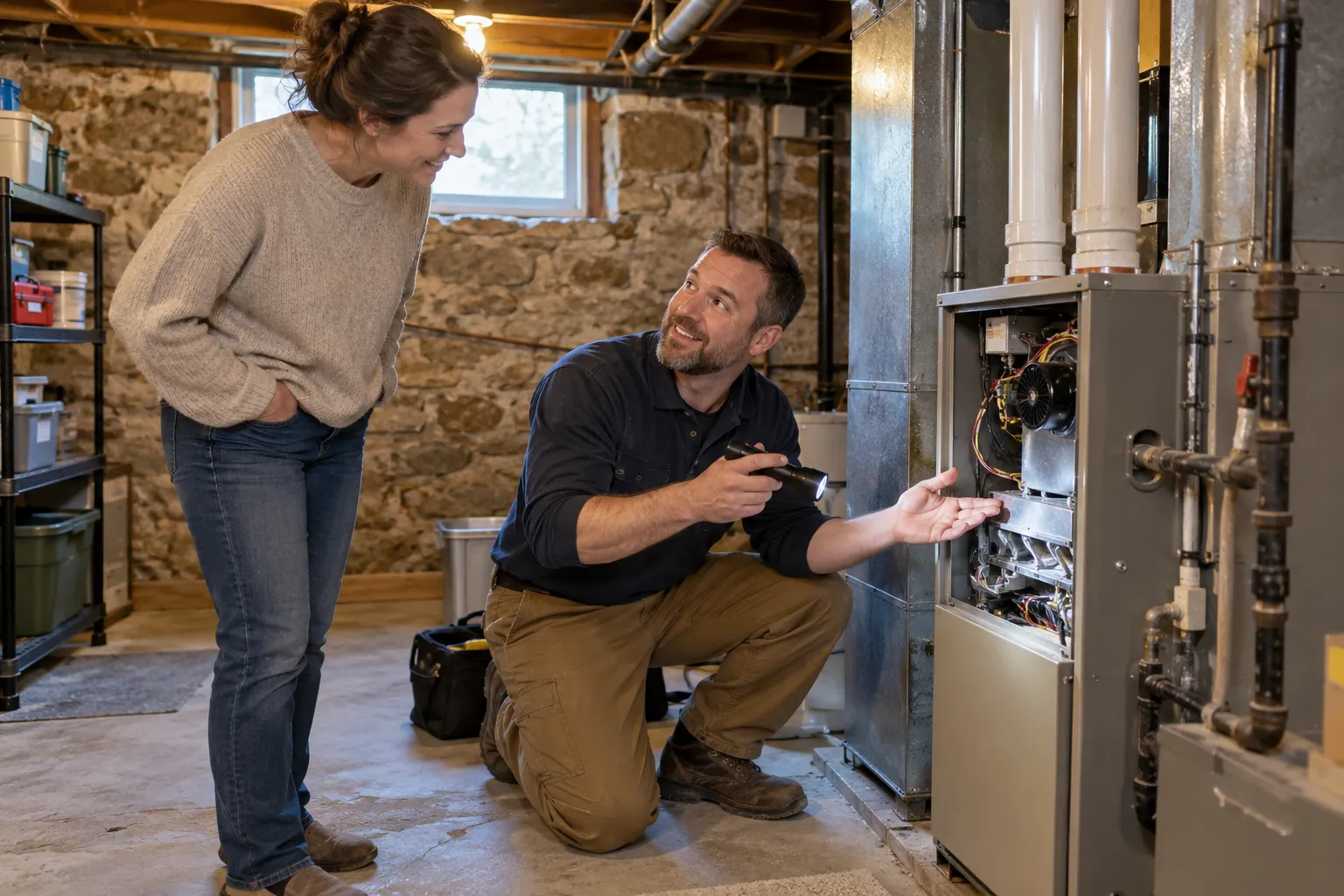
A good visit follows a simple pattern, much like a doctor's appointment. First comes a question about the symptoms. Then comes a look at the system. Then comes a diagnosis and a plan.
The provider will usually check the thermostat, filter, burner, igniter, sensors, blower, and venting. They should explain what they found in plain words and give you a written estimate before starting any repair.
Common Furnace Repairs
Most repairs fall into a few familiar groups.
- Igniter or flame sensor replacement
- Blower motor or capacitor repair
- Inducer motor or pressure switch repair
- Control board or thermostat wiring fixes
- Cleaning and adjusting burners and filters
A cracked heat exchanger is more serious. It can let dangerous gases mix with household air, so a provider may advise shutting the furnace down.
Season by Season: When to Book
Furnace work follows the calendar. Early fall is the quiet window, when providers have open schedules and parts are easy to find. Deep winter is the rush, and everyone wants help at once.
A tune-up before the first cold snap is like an oil change before a road trip. Spring snowmelt is also a good time to check basement furnaces for damp, rust, or water pooling near the base.
Older Homes Have Their Own Quirks
Cape Cod homes, multi-family buildings, and houses with stone or block foundations often have tight mechanical rooms and older ductwork. Long duct runs lose heat on the way, like water through a leaky hose. A local provider who works on this housing style can spot those patterns faster.
Repair or Replace Your Furnace?
Think of an old car. A new battery makes sense. A new engine on a worn-out frame may not. A furnace is similar.
Repair often makes sense when the unit is younger and the problem is one small part. Replacement is worth discussing when the furnace is many years old, needs repeated fixes, has a cracked heat exchanger, or runs up high heating bills. If you search for furnace replacement near me, ask for an estimate that compares both paths side by side.
Questions to Ask the Provider
A few good questions make the visit smoother.
- What exactly failed, and can you show me?
- Is the estimate in writing, with parts and labor listed?
- Are there other options, including a lower-cost repair?
- Is there a warranty on parts and work?
- How soon can the work be scheduled?
Estimate First, Then Decide
You are never locked in by asking. Request an estimate, compare what providers say, and choose the one that feels clear and fair. This kind of heating and cooling decision is easier when you are not rushed, even if the house is chilly.
Keep the Next Winter Easier
Once the heat is back, write down what the provider did and any advice they gave. Change the filter on a schedule, keep vents clear, and book HVAC service each fall. Small habits are like brushing teeth: they feel minor, and they prevent big trouble later.
What's Included
Fault Diagnosis
A provider checks the thermostat, burner, igniter, sensors, and blower to find the real cause of the problem.
Written Estimate
You get parts and labor listed clearly so you can compare before agreeing to any work.
Part Repairs
Common fixes include igniters, flame sensors, motors, capacitors, and control boards, depending on what failed.
Safety Checks
Providers often look at venting and the heat exchanger, since these affect air quality and carbon monoxide risk in the home.
Typical Furnace Repair Costs
Furnace repair prices vary by system age, parts, local labor rates, and how hard the unit is to reach. These typical U.S. ranges are a starting point, so always ask for a written quote.
| Repair item | Typical range | Notes |
|---|---|---|
| Diagnostic visit | $75 – $200 | Often applied toward repair if you proceed |
| Igniter or flame sensor | $150 – $450 | Small parts, common cause of no heat |
| Thermostat replacement | $100 – $350 | Higher for smart or multi-zone models |
| Inducer or blower motor | $350 – $1,500 | Depends on motor type and access |
| Control board | $300 – $800 | Varies by furnace brand and model |
| Heat exchanger repair | $1,500 – $3,500 | Often leads to a replacement discussion |
How It Works
Check Safety First
If you smell gas, leave the home and call your gas utility or emergency services before anything else.
Try Quick Checks
Confirm the thermostat setting, filter, breaker, and furnace switch before you request help.
Request Estimate
Tell us about the problem and we pass it to independent providers in our network.
Compare and Choose a Provider
Review the written estimates, ask your questions, and pick the provider that feels right.
Why Call Newspaperreported Heating & Air
Why Use a Local Provider
Local providers know the weather, older housing styles, and how basement furnaces behave through long cold seasons.
Independent Providers
Each provider sets their own estimate and schedule, so you can compare options freely.
No Obligation
Requesting an estimate does not commit you to hiring anyone.
Plain Explanations
Good providers explain what failed, why, and what choices you have.
Other Services
Need home furnace repair in Jersey City?
Tell us what your system is doing. Request an estimate and a local provider in our network can follow up. No obligation.
No obligationHome Furnace Repair FAQ
- Why is my furnace running but not heating my house?
- The blower may be working while the burner is not lighting. Common causes include a dirty flame sensor, a worn igniter, a clogged filter, or a thermostat setting. A provider can confirm the cause.
- How do I know if I should repair or replace my furnace?
- Repair often fits a younger furnace with one failed part. Replacement is worth discussing for an older unit, repeated breakdowns, or a cracked heat exchanger. Ask for both options in writing.
- Is it safe to keep using a furnace that smells odd?
- A faint dusty smell at the start of winter can be normal. A gas smell or burning smell is not. Leave the house for gas, shut the furnace off, and get help.
Reach a local provider
Tell us what your system is doing. Request an estimate and a local provider in our network can follow up. No obligation.
No obligation