AC Repair in Englewood: Calm Steps and Local Help
Request an estimate
When the air in your house stops feeling cool, it is easy to panic. Slow down, then act. An air conditioner works like a cooler for your whole home, moving heat outside instead of making cold. In Englewood, that job gets harder when a hot week meets a tired system. Newspaperreported Heating & Air is a referral service. We explain what is likely happening, then connect you with independent providers in our network who give estimates and do the work.
Check These Few Things Before Anything Else
Think of your AC like a bicycle. Sometimes the chain has only slipped off. Other times a part is worn through. A few simple checks help you tell which one you have in Englewood.
These are safe for most homeowners:
- Confirm the thermostat is set to cool and has working batteries.
- Look at the breaker panel for a tripped switch.
- Pull the air filter. If it is gray and thick with dust, replace it.
- Clear leaves, grass and clutter from around the outdoor unit.
Then stop. Removing panels, touching wiring or handling refrigerant lines is work for a trained provider. If you see ice on the pipes, smell something burning, or hear grinding or buzzing, switch the system off at the thermostat and ask for help.
Homes in Englewood Cool in Their Own Way
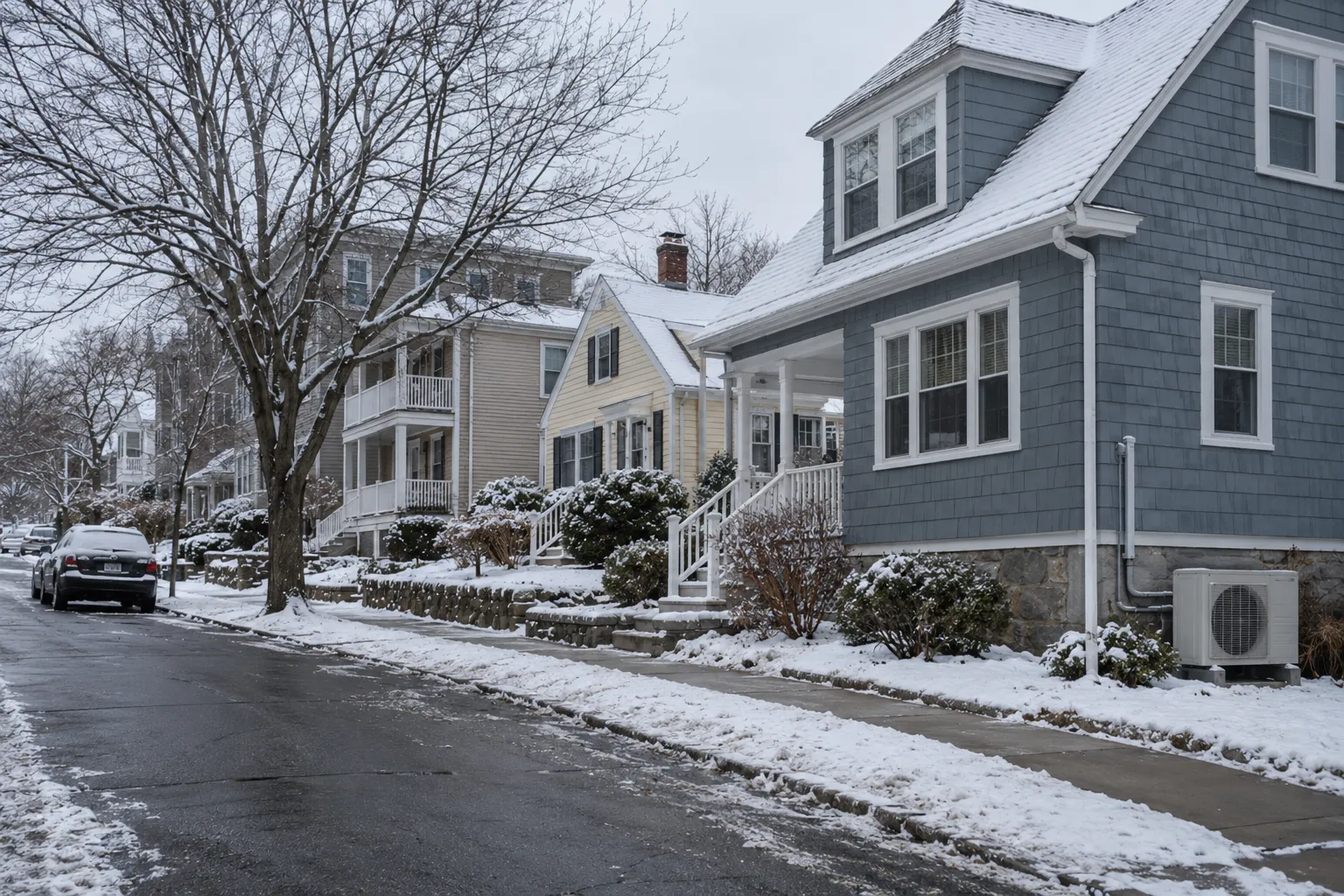
A house is like a thermos. How well it holds cool air depends on how it was built. Many homes across this region are older, with thin attic insulation and ductwork that was added later. Cape Cod style homes often have rooms tucked under a sloped roof, and those rooms warm up first. Multi-family buildings may share walls or run more than one system. Full basements with stone or block foundations stay cooler, but they can be damp, and dampness can stress equipment placed nearby.
What this means for you: the same warm-air complaint can have different causes from one home to the next. A provider looks at your system and your house together. Request a callback to check provider availability if the upstairs is hot and the downstairs feels fine.
What Summer Heat and Winter Weather Do to an AC
An AC unit lives outside all year. It is like a rubber band left on a porch. After enough cold snaps, it gets stiff and can crack. In this region, cold snowy winters and repeated thaw and re-icing can loosen fittings, shift the pad under the outdoor unit, and leave water sitting where it should drain. Spring snowmelt carries grit and debris toward the unit. Coastal storms bring salty air, which wears down metal parts, and power surges, which can harm circuit boards and motors.
Then the first hot week arrives and the system must run hard all at once. That is often when a weak part gives out. It is not bad luck. It is the first real test of the year.
The Repairs Providers Usually Handle
When a provider visits, the first job is to find the real cause. Common work includes:
- Electrical parts: replacing a weak capacitor, contactor or relay.
- Refrigerant: finding a leak and recharging the system once the leak is fixed.
- Coils: cleaning a dirty indoor or outdoor coil, or thawing an iced-over one.
- Drain line: clearing a clog that causes water stains or shut-offs.
- Fan and blower motors: repairing or replacing a motor that hums but will not spin.
- Thermostat: replacing or rewiring a unit that sends the wrong signals.
If the AC is very old or the repair is large, a provider may also talk about replacement. Typical U.S. repair bills range from about one hundred dollars for small fixes to well over a thousand for major parts, and costs vary by job. Ask for a written quote. Need emergency AC repair on a very hot day? Say so in your request so providers know it is urgent.
Keeping the Problem From Coming Back
Good upkeep is like brushing your teeth. Small, steady care prevents big bills. Season by season, here is a simple plan:
- Spring: book an HVAC service visit before the heat arrives, and clear winter debris from the unit.
- Summer: change the filter every one to three months and keep plants trimmed back.
- Fall: clean around the unit, and have your heating and cooling systems checked together.
- Winter: keep snow and ice from piling against the outdoor unit.
After a repair, ask the provider what caused the failure and what to watch for. Write the answer down so you have it next summer.
What a Typical Job Looks Like
Knowing the steps keeps stress down. It is like a doctor visit: questions, an exam, a plan, then treatment.
- Request: you send details about the problem and your home.
- Contact: a provider in our network reaches out. Many providers can respond quickly, but timing varies.
- Visit: the provider inspects the system and finds the cause.
- Quote: you get a written estimate before work begins. You can say no. There is no obligation.
- Work: simple fixes may be done in one visit, while parts that must be ordered take longer.
- Test: the provider runs the system and shows you the result.
Ready to start? Ask for an estimate in Englewood and compare your options calmly.
Our Services in Englewood
Why Englewood Chooses Newspaperreported Heating & Air
Clear Steps for a Stressful Day
We explain what is likely happening and what to try first, so you can slow down, then act, instead of guessing while the house warms up.
Estimate First Approach
You request an estimate before any work is agreed. Providers quote the job, and you decide with no obligation.
Providers Who Know Seasons
Independent providers in our network see how heat, snowmelt and coastal storms affect cooling systems across the region year after year.
Plain Answers, No Obligation Attached
Newspaperreported Heating & Air is a referral service. We connect you with providers, and the providers do the work and set their own prices.
Request Your AC Estimate Today
Tell us what your system is doing. Request an estimate and a local provider in our network can follow up. No obligation.
No obligationNearby Areas We Serve
Reach a local provider
Tell us what your system is doing. Request an estimate and a local provider in our network can follow up. No obligation.
No obligation